
Orthodontic care is no longer reserved for middle schoolers with a mouthful of metal. It’s a lifelong resource that can support healthy bites, confident smiles, and long-term oral health at nearly any age.
Whether you’re a parent wondering when to book that first evaluation, a teen weighing your options, or an adult who has quietly thought about straightening your teeth for years, this guide walks you through what to expect at each stage of life.
Why Orthodontic Care Matters at Every Stage of Life
Orthodontic care is the branch of dentistry focused on aligning teeth and jaws so they function well and look their best. That mission doesn’t have an age limit.
A balanced bite affects far more than appearance. It influences how you chew, how you speak, how easily you clean your teeth, and how comfortable your jaw feels day to day. When teeth are well aligned, they’re easier to care for and less likely to wear unevenly over time.
Today’s options give patients more choices than a generation ago. Invisalign, clear braces, and refined metal braces give patients of all ages discreet, effective ways to reach their goals. Here’s a quick preview of what’s ahead:
- Ages 6-10: First evaluations and early guidance
- Ages 11-14: The classic window for full treatment
- Ages 15-20: Late teens balancing school, sports, and appearance
- Adults 20s-50s: Discreet options and functional benefits
- Seniors 60+: Coordinated care with your dental team
At McDermott Orthodontics in Arnold and Florissant, MO, Dr. Richard McDermott sees patients of all ages, and each plan is built around the person in the chair.
Ages 6-10: The First Orthodontic Visit and Early Intervention
When should my child first see an orthodontist? The American Association of Orthodontists recommends a first orthodontic evaluation by age 7, even if no treatment is needed yet.
By this age, enough permanent teeth have come in and enough jaw growth has happened for Dr. McDermott to spot patterns that could benefit from early guidance. Most children who come in at 7 don’t need braces right away. The visit is about monitoring, not rushing.
When early treatment does make sense, it’s called Phase 1, or interceptive orthodontics. The goal is to guide jaw development, create room for permanent teeth, and address habits or bite issues while a child is still growing.
Signs your child may benefit from an early evaluation include:
- Early or late loss of baby teeth
- Crowded or overlapping front teeth
- A crossbite (upper and lower teeth don’t line up correctly)
- Thumb sucking past age 5
- Mouth breathing or difficulty chewing
- A jaw that shifts to one side when biting
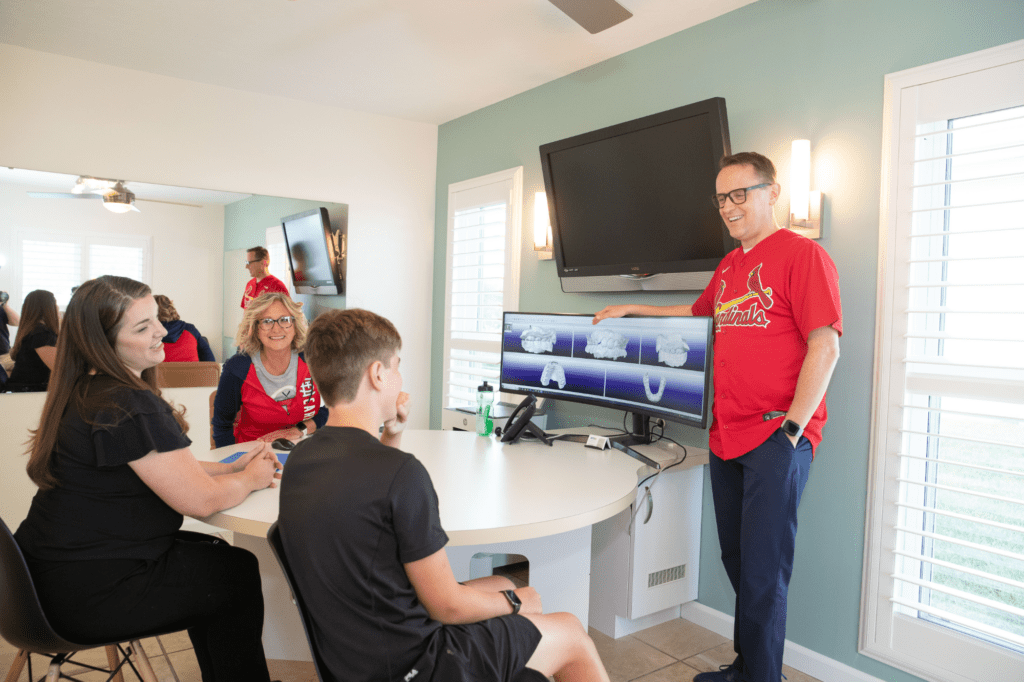
At the first visit, Dr. McDermott will review your child’s medical and dental history, take a look at how the teeth and jaws fit together, and often capture digital images. You’ll leave with a clear picture of whether treatment is recommended now, later, or not at all.
Common Phase 1 appliances may include palatal expanders, partial braces on select teeth, or space maintainers. These tools are designed to make later treatment shorter and simpler, not to replace it.
Ages 11-14: Complete Treatment During the Tween and Early Teen Years
This is the age range most people picture when they think of braces. By 11 to 14, most permanent teeth have erupted, and the jaw is still growing enough to respond well to treatment.
This stage is often called Phase 2, or full orthodontic care. The goal is to align every permanent tooth, fine-tune the bite, and set up a healthy smile for the decades ahead.
Options at this age typically include:
- Metal braces with modern, smaller brackets and lighter wires
- Clear braces that blend in with tooth color for a subtler look
- Invisalign for teens who prefer a removable option
Most cases in this age group finish in about 12-24 months, though the exact length depends on complexity. Dr. McDermott will share a personalized estimate at your consultation.
Social and emotional comfort matters here too. Tweens are often more aware of how they look, so we spend time walking through the options together. Some patients love the color choices that come with metal braces. Others feel more confident with Invisalign or clear braces. There’s no wrong answer, only what fits your child best.
Ages 15-20: Late Teens and Young Adults
Am I too old for braces at 18? Not at all. Late teens and young adults are one of the fastest-growing groups in orthodontic care.
At this stage, appearance often moves up the priority list. Many patients ask about Invisalign or clear braces so their smile looks natural during senior photos, job interviews, or college move-in day. Both options can produce beautiful results when the treatment plan is a good match for the case.
Lifestyle plays a role too. Sports team, wind instrument, heading off to college? We’ll talk through how each option fits your schedule. Invisalign is removable for meals and games. Braces don’t require you to keep track of trays. Dr. McDermott helps you weigh the trade-offs honestly.
A few common reasons late teens seek care include:
- Correcting shifting that happened after earlier treatment
- Addressing crowding that developed as wisdom teeth erupted
- Improving the smile before senior photos or graduation
- Preparing for restorative work later in life
Wisdom teeth deserve a quick mention. While research on their exact role in shifting is mixed, they can influence how the back teeth fit together. We’ll coordinate with your dentist or oral surgeon when needed.
Adult Orthodontics (20s-50s): It’s Never Too Late
Can adults still get orthodontic care? Absolutely. A large share of orthodontic patients today are adults, and the number continues to grow as discreet options become more widely known.
Adults choose orthodontic care for two main reasons: how their smile looks and how their bite works. Both goals are equally valid, and often they overlap.
Discreet options make adult treatment easier to fit into professional life:
- Invisalign, a series of custom, clear aligners you can remove for meals and meetings
- Clear braces, which use tooth-colored brackets that blend in
- Metal braces, still an excellent choice for complex cases and often the most efficient option
Beyond appearance, aligned teeth are simply easier to clean. That can support long-term gum health, reduce uneven wear, and in some cases ease jaw tension or TMJ discomfort. If you’ve noticed one tooth chipping faster than the others or your bite feeling off, orthodontic care may help.
Adult treatment timelines are often similar to teen timelines, though some cases take a bit longer because adult bone doesn’t remodel as quickly. Most adults finish in 12-24 months.
Insurance is a common question. Our Arnold and Florissant team reviews your benefits, explains what’s covered, and offers easy financing options. Dr. McDermott is also an elite Invisalign provider, which means adults exploring aligners are in experienced hands.
Orthodontic Care for Seniors (60+)
Can seniors get braces? Yes. Orthodontic care after 60 is more common than most people realize, and it’s proof that your smile is natural jewelry, no matter your age. Modern tools, lighter wires, and clear aligners make treatment gentler than it used to be, and aligning teeth can also set the stage for crowns, bridges, or implants your dentist may have planned.
At this stage, treatment is often part of a larger plan that includes your general dentist and, in some cases, a periodontist or restorative specialist. Aligning teeth can create better spacing for a crown, bridge, or implant, and it can make daily cleaning easier as dexterity changes.
A few considerations we discuss with senior patients at McDermott Orthodontics:
- Current gum and bone health, so treatment moves teeth safely
- Any restorations already in place, such as crowns or bridges
- Coordinating timing with upcoming dental work
- Comfort and appointment pacing that fits your schedule
Many seniors are surprised by how gentle modern orthodontic care feels. Lighter wires, refined brackets, and clear aligners have made the experience more comfortable than it was decades ago. If you’ve been told for years that it was too late, it’s worth a fresh conversation at our Arnold or Florissant office.
Choosing Orthodontic Care at Every Age and Lifestyle
With so many options, the best choice depends on your goals, your daily life, and the specifics of your bite. Here’s a quick side-by-side view:
| Option | Visibility | Removable | Best For |
|---|---|---|---|
| Metal braces | Most visible | No | All case types; younger patients who enjoy color choices |
| Clear braces | Subtle | No | Teens and adults who want fixed treatment without the metal look |
| Invisalign | Nearly invisible | Yes | Patients who prioritize discretion and can wear trays 20-22 hours per day |
Lifestyle factors worth thinking about include your work environment, sports and activities, how disciplined you are about wearing trays, and how visible you want treatment to be. There’s a good fit for nearly every situation.
Tools have improved across the board. Digital 3D scanning has replaced messy impressions for most patients. Treatment planning software helps Dr. McDermott, an elite Invisalign provider, map each stage of tooth movement before you begin. And retainers, worn consistently after treatment, keep your smile reveal looking beautiful for years to come.
Speaking of retention, it’s the step that protects everything you’ve invested. Teeth naturally want to shift over a lifetime, so wearing your retainer as prescribed is the key to lasting results.
Schedule Your Free Consult: Start at Any Age
Orthodontic care truly is available and effective at every age. The best next step is simply learning what’s possible for you or your child.
At your free consult with Dr. McDermott, you can expect:
- A friendly welcome from our team
- A full look at your teeth, bite, and smile goals
- Digital images and, when helpful, a 3D scan
- A clear explanation of your options, timelines, and easy financing
- Time to ask every question on your mind
Whether you’re booking a first evaluation for your 7-year-old, exploring Invisalign as an adult, or coordinating care with your dentist later in life, we’d love to meet you. Learn more about our Invisalign and braces options, or reach out to our Arnold location or Florissant location to schedule a visit whenever you’re ready.
Your smile story is worth telling at any age, and McDermott Orthodontics is honored to help you start it.